
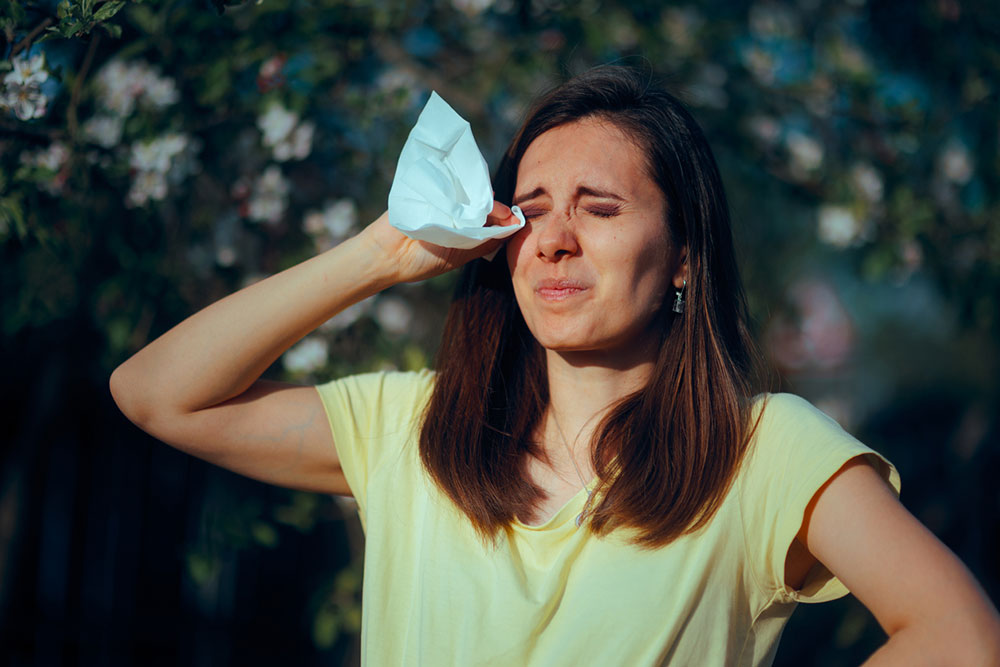
If your eyes are red, itchy, or watery, it is very common in Arizona. Up to 40% of Arizonans suffer from ocular allergies (allergic conjunctivitis) each year. Without proper care, chronic irritation can interfere with work, play, and quality of life. At Southwestern Eye Center, Dr. Renée McCoy and our compassionate team use proven, personalized treatments to stop the scratch and restore clear, comfortable vision fast.
What Are Ocular Allergies?
When allergens like pollen, pet dander, or dust mites land on your eye’s surface, your body releases histamine. That reaction causes the redness, itching, tearing, and swelling of the conjunctiva (the transparent membrane covering your eye).
Common Triggers & Symptoms
Triggers
- Seasonal pollens (trees, grass, weeds)
- Indoor allergens (dust mites, mold)
- Animal dander (cats, dogs)
- Environmental irritants (smoke, perfumes)
Symptoms
- Persistent itching or burning
- Redness or a pink tint in the whites of your eyes
- Excessive tearing or watery discharge
- Swollen, puffy eyelids
“Symptoms of ocular allergies are Itchy, red, watery eyes with puffy, swollen eyelids or conjunctiva. These symptoms may be accompanied by stringy, mucus, or blurry vision. Common ocular allergy triggers are pollen from seasonal blooming flowers or trees, pet dander, dust mites, and mold.” – Dr. Renée McCoy
Ocular Allergy Treatments for Relief
- Avoidance & Hygiene
To reduce allergen exposure, shut windows, run HEPA air purifiers, wash hands and face after being outdoors, and launder bedding in hot water. - Over‑the‑Counter Drops
Artificial tears or antihistamine/mast‑cell stabilizer formulations to soothe mild, occasional flare‑ups. - Prescription Eye Medications
More potent antihistamine or steroid drops for moderate‑to‑severe allergy symptoms that persist despite OTC remedies. - In‑Office Allergy Testing & Immunotherapy
Pinpoint your triggers with professional testing, then build tolerance with targeted allergy shots or specialized eye‑drop protocols over time.
Prevention Tips
Small, consistent changes can meaningfully reduce allergen exposure and improve eye comfort. Clinical research supports a multi-step approach focused on limiting contact with triggers and protecting the ocular surface.
- Keep windows closed during high pollen periods
This helps prevent airborne allergens from entering your home, a first-line recommendation in allergy management. - Use air conditioning and HEPA filtration
High-efficiency particulate air (HEPA) filters can remove a large percentage of airborne particles, including pollen, dust, and mold, improving indoor air quality. - Wash your face, hands, and hair after outdoor exposure
Pollen and allergens cling to skin and hair, so cleansing helps reduce ongoing exposure and irritation. - Avoid rubbing your eyes
This is critical. Eye rubbing can worsen symptoms or even lead to long-term complications, such as corneal damage.
These strategies won’t eliminate allergies entirely, but research shows that reducing exposure through multiple small interventions can improve symptoms, decrease flare-ups, and enhance overall quality of life.
Get Relief at Southwestern Eye Center
Ocular allergies may be common, but your eyes are not. What works for one patient may not work for another. That’s why a personalized evaluation is important, especially if symptoms keep coming back or are getting worse.
At Southwestern Eye Center, the focus is on identifying the root cause of your symptoms and creating a treatment plan that helps you see and feel better, not just temporarily, but consistently.
If your eyes are constantly irritated, watery, or affecting your vision, don’t just push through it. Schedule an evaluation and get clarity on what’s really going on. Relief is possible, and it starts with the right diagnosis.