Light Adjustable Lens™ (LAL)

At Southwestern Eye Center, your cataract surgeon can help you compare the Light Adjustable Lens with other advanced cataract lens options and determine whether its customization process fits your eyes, your lifestyle, and your vision goals.

What Is The Light Adjustable Lens?

The Light Adjustable Lens is an advanced cataract lens implant that can be adjusted after cataract surgery. Like other intraocular lenses, it replaces the eye’s natural lens after a cataract is removed. The difference is that the LAL is made from a photosensitive material that responds to carefully controlled ultraviolet light.

After your eye heals, your surgeon uses a specialized office-based device, the Light Delivery Device™, to make planned adjustments to the implanted lens. This process allows your cataract surgeon to refine the lens power after surgery rather than relying solely on preoperative measurements.

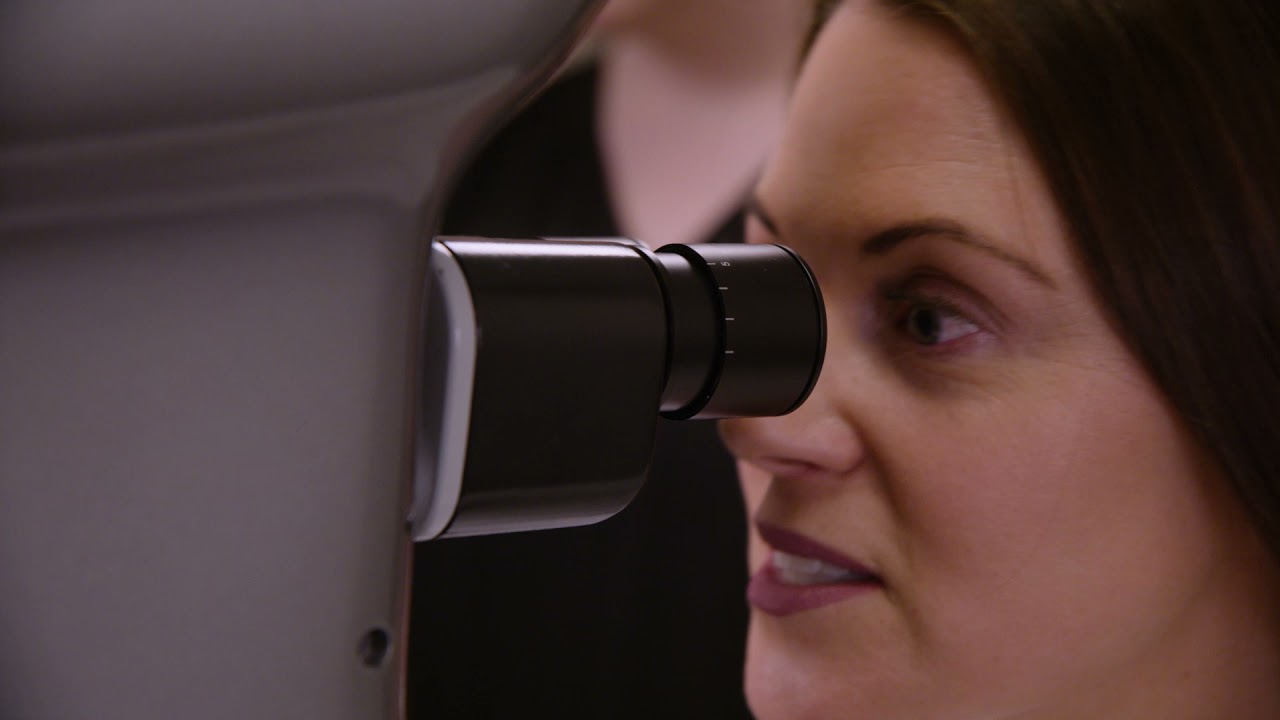
Play Video
Video thumbnail

How Does the Light Adjustable Lens Work?

1

Cataract Surgery

Your cataract surgeon removes the cloudy natural lens and implants the Light Adjustable Lens in its place. The surgery itself is performed in a similar manner to cataract surgery with another intraocular lens.

2

Healing and Vision Testing

Your eye needs time to heal and stabilize before adjustments begin. During this period, your surgeon and care team monitor your recovery, measure your vision, and discuss how you are functioning with your new lens.

3

Light Treatments

Once your eye is ready, you will return for brief light treatments using the Light Delivery Device. These treatments help your surgeon fine-tune your vision and address residual astigmatism.

4

Final Lock-In Treatments

When you and your surgeon are satisfied with the selected visual result, final light treatments lock in the lens power. After the lock-in process is complete, the prescription can no longer be changed.

Abstract purple light pattern with horizontal glowing lines, used as a futuristic background for Southwestern Eye Center’s Light Adjustable Lens page.

Rediscover the Details In Your World With LAL

At Southwestern Eye Center, your evaluation includes a detailed eye health assessment, cataract measurements, a discussion of your daily visual needs, and a personalized review of cataract lens options. Your surgeon can explain whether the Light Adjustable Lens may be an appropriate choice for your eyes and what the treatment schedule would look like for you

How Is the Light Adjustable Lens Different From a Traditional Cataract Lens?

A standard (fixed) monofocal, toric, multifocal, trifocal, or extended-depth-of-focus lens is selected before cataract surgery. Those lenses can provide excellent results, but their prescription power is fixed after implantation.

The Light Adjustable Lens is different because your cataract surgeon can make controlled postoperative adjustments before the lens is permanently locked in place. It is an additional opportunity to refine the final result after your eye has stabilized.

What to Expect With a Fixed Cataract Lens With the Light Adjustable Lens
Lens Power Lens power is selected before surgery. Lens power is selected before surgery and can be refined after healing.
After-Surgery Adjustments The prescription cannot be changed after implantation. Planned adjustments can be made with office-based light treatments.
Follow-Up Care Follow-up care follows a typical cataract recovery schedule. Requires a series of additional treatment visits.
UV Protection No special UV eyewear is needed for the implanted lens. Protective glasses are required until the treatment process is complete.
Who It May Fit May be an excellent fit for many cataract patients. May be a strong option for patients who value postoperative customization.

The Light Adjustable Lens is FDA approved for use in eligible adult cataract patients with preexisting corneal astigmatism and no preexisting macular disease. Your surgeon will determine whether your eyes and medical history meet the approved use criteria and whether another lens option better supports your visual needs.

Who May Be a Candidate for the Light Adjustable Lens™?

You may be a candidate for the Light Adjustable Lens™ if you:

  • Have cataracts that are affecting your vision or daily activities
  • Want to explore a more customizable cataract lens option
  • Have corneal astigmatism
  • Have had previous LASIK, PRK, or another refractive procedure
  • Are willing to attend multiple postoperative appointments
  • Can wear the required UV-protective glasses as directed
  • Have healthy enough corneal, retinal, and macular function to support the planned visual outcome


A cataract evaluation is the only reliable way to know whether the LAL is appropriate for your eyes.

Our advanced technology multifocal and trifocal lenses are available at Southwestern Eye Center.

How Are Light Treatments Performed?

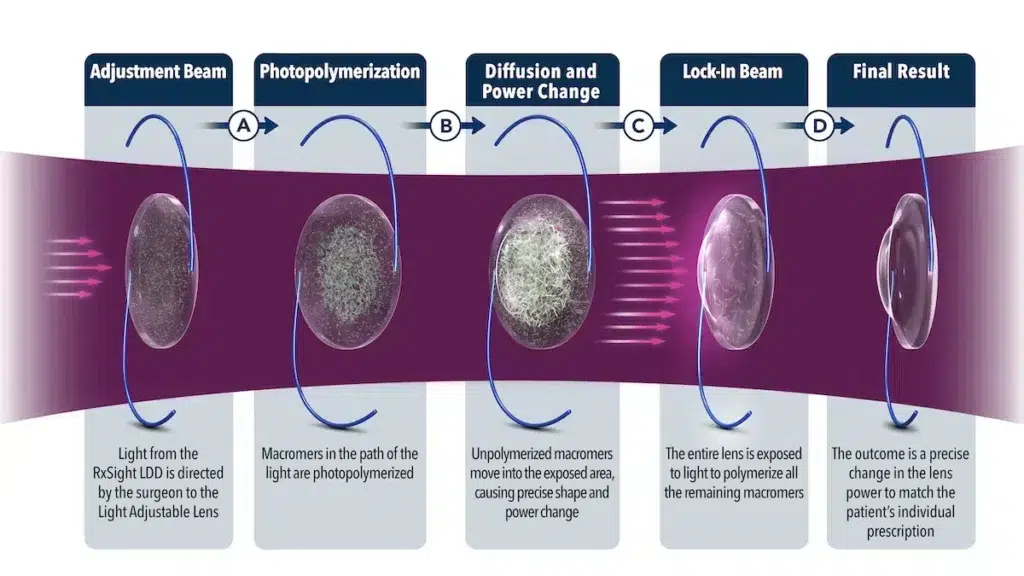
To receive the light treatment, you will be placed in front of the office-based Light Delivery Device (LDD). The LDD non-invasively delivers UV light to your Light Adjustable Lens, adjusting your vision to the desired target. The system gives your doctor the flexibility to make adjustments and refinements to meet your specific criteria. Following the light treatment, you will be rechecked in approximately 3 days to assess your vision.

Light treatments are delivered in our clinic with the Light Delivery Device. Between 3 and 5 total light treatments, each lasting approximately 90 seconds and separated by a minimum of 3 days, are required. The total number of light treatments is based on the achievement of the desired vision outcome that you and your doctor selected. When you experience the results of your adjustments, you will better understand the value of adjusting and customizing your vision after your surgery.

Once you have achieved your optimal vision, the lens power is permanently locked in with a final light treatment to prevent any further changes.

Graphic showing how the light treatments are performed

Light Adjustable Lens™ Testimonials

Why Our Patients Choose LAL

1

A Vision Plan That Can Be Refined After Healing

The Light Adjustable Lens creates a window after surgery to fine-tune the lens based on your actual postoperative vision rather than pre-surgery estimates alone.

2

More Flexibility for Astigmatism Correction

Astigmatism can blur vision because the eye does not focus light evenly. The LAL may help your surgeon reduce residual astigmatism after cataract surgery through customized light treatments.

3

A Useful Option to Discuss After LASIK or PRK

Prior LASIK, PRK, or RK can make cataract lens planning less predictable. With the Light Adjustable Lens, your surgeon can fine-tune your vision after healing.

4

A More Personalized Decision-Making Process

Some patients know exactly what they want before cataract surgery, but many do not realize their preferences until after the cataracts are removed. The LAL provides the opportunity to determine your final vision plan after surgery.

FAQ: Light Adjustable Lens

The cataract removal and lens implantation portion is similar to standard cataract surgery. The main difference happens after surgery: LAL patients return for a series of light treatments that allow the surgeon to refine the lens prescription after the eye has healed.

The number of visits varies based on your healing, vision measurements, and selected visual goal. Expect multiple postoperative appointments, including adjustment visits and final lock-in treatments.

No. Light treatments are performed in the office with the Light Delivery Device and do not require another surgical procedure.

No. You should wear the protective glasses provided by RxSight as directed by your surgical team. The manufacturer does not guarantee that ordinary UV sunglasses or another brand’s glasses provide the same level of protection during the adjustment period.

The Light Adjustable Lens may help address astigmatism in eligible patients. Your cataract surgeon will evaluate your measurements and determine whether it is appropriate for your eyes.

No. Some medical conditions, medications, and lifestyle factors can make another lens option safer or more appropriate. Your surgeon will help

Possibly. Many patients hope to reduce dependence on glasses, but outcomes vary. You may still need glasses for reading, computer work, low-light activities, or other tasks depending on your eye health and the final vision plan.

Medicare and many private insurance plans generally cover medically necessary cataract surgery with a standard monofocal lens. The Light Adjustable Lens is an advanced technology lens, so patients typically have an out-of-pocket cost beyond standard insurance coverage. Your care team will review expected costs before surgery