Astigmatism: Symptoms, Cataracts, LASIK, And Lens Options
Astigmatism is a common vision problem that can make objects look blurry, stretched, shadowed, or distorted at near and far distances. It occurs when the cornea or lens has a shape that’s different from normal, altering how light focuses inside the eye. The good news is that astigmatism can often be measured during an eye exam and managed with glasses, contact lenses, LASIK, or cataract lens options, depending on your age, eye health, and vision goals.
If you live in Arizona or New Mexico and notice blurry vision, glare, squinting, or trouble seeing clearly at night, an eye exam at Southwestern Eye Center can help identify whether astigmatism is part of the problem. From routine vision correction to advanced cataract lens planning, the right exam gives your doctor the information needed to recommend your best next step.
What Is Astigmatism?
Astigmatism is a type of refractive error. A refractive error means the eye does not bend, or refract, light evenly onto the retina.
A healthy eye should focus light clearly at the back of the eye. With astigmatism, the curve of the cornea or lens is uneven. Many people describe it as more football-shaped than perfectly round. Because of that uneven curve, light can focus in more than one place instead of forming one sharp point.
Astigmatism is very common. It can occur on its own or alongside nearsightedness or farsightedness. Some people have mild astigmatism and barely notice it. Others may struggle with daily tasks because their vision feels blurry, doubled, stretched, or inconsistent.
How Astigmatism Affects Vision
Astigmatism can affect vision at any distance. Some people notice it most while driving. Others notice it while reading, using a computer, or looking at bright lights at night.
Common symptoms may include:
Blurry or distorted vision
Squinting to see clearly
Eye strain or tired eyes
Headaches after reading or screen use
Glare, halos, or starbursts around lights
Trouble seeing clearly at night
Frequent changes in glasses or contact lens prescriptions
Astigmatism can feel frustrating because it does not always create simple blur. Straight lines may look slightly wavy. Letters may appear shadowed. Headlights may look smeared or stretched. You may also feel like your glasses help, but they never make your vision feel perfectly crisp.
That is why testing matters. Astigmatism is measurable, and the right prescription or treatment plan can often make vision feel much sharper.
Astigmatism And Cataract Surgery Planning
Astigmatism can become more noticeable as cataracts begin to affect vision. Cataracts cloud the eye’s natural lens, which can make vision look dim, yellowed, foggy, or blurry. If you also have astigmatism, both problems can affect how clearly you see.
Cataract surgery removes the cloudy natural lens and replaces it with an intraocular lens, or IOL, which is an artificial lens that replaces the eye’s natural lens after cataract removal.
That makes cataract surgery an important time to talk about astigmatism. A standard monofocal lens can restore clarity after cataract surgery, but it may not correct astigmatism. If astigmatism remains untreated, you may still need glasses for sharper distance vision after surgery.
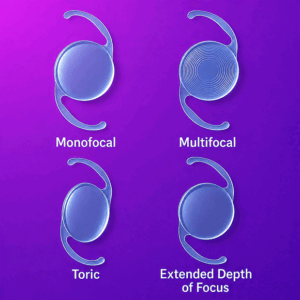
Southwestern Eye Center offers traditional cataract surgery and premium laser cataract surgery, including lens options such as monofocal lenses, toric lenses for astigmatism correction, and multifocal or extended-focus lenses for broader vision.
Astigmatism And LASIK Planning
Astigmatism can also affect LASIK planning. LASIK reshapes the cornea so light can focus more clearly on the retina. LASIK can treat nearsightedness, farsightedness, and astigmatism by reshaping the cornea.
That does not mean everyone with astigmatism qualifies for LASIK. Your doctorneeds to evaluate your prescription stability, corneal thickness, corneal shape, tear film, and overall eye health.
LASIK may treat astigmatism, but good candidates must meet criteria such as a stable prescription, healthy corneas with adequate thickness, and no uncontrolled eye conditions, such as advanced glaucoma or corneal disease.
Astigmatism is not automatically a LASIK complication. Instead, it makes careful screening more important. If your astigmatism is regular and your eyes meet the right criteria, laser vision correction may be an option. If your cornea is too thin, irregular, dry, or unhealthy, your doctor may recommend glasses, contact lenses, PRK,EVO ICL, cataract lens planning, or another approach.
Advanced Technology Lens Options For Astigmatism
Advanced technology lens options can help some cataract patients reduce their dependence on glasses after surgery. The right choice depends on your eye measurements, cataract severity, corneal shape, lifestyle, and whether you want clearer vision at one distance or multiple distances.
For patients with cataracts and astigmatism, toric lenses are often an important option. A toric lens is designed to correct astigmatism during cataract surgery. Toric lenses provide clear distance vision while correcting astigmatism, though patients may still need glasses for near and intermediate vision.
Other advanced lens options may include multifocal, trifocal, extended focus, or Light Adjustable Lens technology, depending on your goals and candidacy. Southwestern Eye Center also offers ORA technology, which can help surgeons choose an accurate intraocular lens implant and more accurately correct astigmatism during cataract surgery.
The key point is simple: advanced technology should match your eyes, not just your wish list. Your doctor will recommend an option after testing because astigmatism correction depends on precise measurements.
How Astigmatism Is Diagnosed
Astigmatism is diagnosed during an eye exam. Your eye doctor may use several tests to measure how clearly you see and how your eyes focus light.
This matters because blurry vision is not always “just astigmatism.” Cataracts, dry eye, diabetes-related vision changes, corneal disease, and other eye health issues can also affect clarity. A comprehensive exam helps your doctor separate prescription needs from medical eye concerns.
When To Get An Eye Exam
You should schedule an eye exam if your vision feels blurry, distorted, or harder to correct with glasses or contacts. You should also get checked if your night vision changes, glare increases, or your prescription seems to shift more often than usual.
An exam is especially important if you notice:
New or worsening blurry vision
Trouble driving at night
Glare or halos around lights
Eye strain with reading or screen use
Frequent squinting
Headaches related to visual tasks
Cataract symptoms, such as cloudy or faded vision
Interest in LASIK, cataract surgery, or advanced technology lens options
For patients in Arizona and New Mexico, Southwestern Eye Center can evaluate astigmatism as part of routine eye care, LASIK screening, or cataract surgery planning. If you are unsure what type of appointment you need, scheduling an exam is often the best first step.
See What Is Really Causing Your Blurry Vision
Astigmatism can affect daily life in subtle ways, from night driving to reading small print to feeling like your glasses never quite do enough. Schedule an eye exam with Southwestern Eye Centerto measure your vision, check your eye health, and understand whether glasses, contacts, LASIK, cataract surgery, or advanced technology lens options may help you see more clearly.
FAQ: Astigmatism
Astigmatism is a common refractive error caused by an uneven curve in the cornea or lens of the eye. This uneven shape alters how light focuses inside the eye, which can make vision appear blurry, distorted, shadowed, or stretched.
Astigmatism can make lights look smeared, letters look shadowed, and objects appear blurry at near or far distances. Some people notice it most while driving at night, reading, using screens, or looking at bright lights.
Astigmatism and cataracts are distinct conditions, but they can affect vision simultaneously. Cataracts cloud the natural lens, while astigmatism changes how light focuses. Together, they can make vision feel blurrier or less crisp.
Yes, cataract surgery can sometimes correct astigmatism when the right lens or surgical plan is used. Toric lenses are designed to correct astigmatism during cataract surgery, but your doctor will need detailed measurements before recommending the best option.
LASIK can correct some forms of astigmatism by reshaping the cornea. Not everyone is a candidate, so your doctor will check your prescription stability, corneal thickness, tear film, and overall eye health before recommending LASIK.
Yes, glasses and contact lenses can often correct astigmatism. Some patients do well with glasses, while others may need toric contact lenses or specialty lenses, depending on their prescription and eye shape.
Astigmatism is diagnosed during an eye exam. Your doctor may use refraction testing, corneal measurements, and other eye health testing to determine the amount and type of astigmatism you have.
Schedule an exam if you notice blurry vision, glare, halos, squinting, eye strain, headaches, night driving problems, or frequent prescription changes. You should also schedule an exam if you are considering LASIK or cataract surgery.
Southwestern Eye Center evaluates astigmatism for patients across Arizona and New Mexico. Treatment recommendations may include glasses, contact lenses, LASIK consultation, cataract surgery planning, or advanced technology lens options, depending on your exam results.
Related Posts
Schedule An Appointment Online
Book your next eye care appointment online at a time that works for you. Our easy online scheduling tool makes it simple to find available appointments and request the care you need.