Multifocal and Trifocal Lenses for Cataract Surgery
Multifocal and trifocal lenses can help patients see more clearly at multiple distances after cataract surgery. Instead of replacing a cloudy cataract lens with a standard lens focused on a single distance, these advanced technology lenses are designed to support a broader range of vision. Some multifocal lenses include trifocal technology to support distance, intermediate, and near vision, which may help with activities like driving, using a computer, reading, and enjoying everyday life with less dependence on glasses.
When cataracts start making your vision cloudy, dim, or frustrating, it can feel like the small parts of your day require more effort than they should. Reading a menu, checking your phone, seeing the dashboard, or watching a grandchild across the room may not feel as easy as it used to.
Your cataract lens choice matters. At Southwestern Eye Center, your cataract evaluation helps your doctor understand your eye health, lifestyle, and vision goals so you can choose the lens option that fits your needs. Schedule your evaluation today.
What Are Multifocal and Trifocal Lenses?
Multifocal and trifocal intraocular lenses (IOLs) are used during cataract surgery. During the procedure, your surgeon removes the cloudy natural lens affected by cataracts and replaces it with a clear artificial lens.
A standard monofocal lens typically focuses vision at one main distance. Many patients choose distance vision and use glasses for reading or other close-up tasks. Multifocal and trifocal lenses differ because they are designed to help the eye focus at more than one distance.
These lens options may support:
Distance vision for driving, watching TV, or seeing across a room
Intermediate vision for computer work, cooking, shopping, or seeing the dashboard
Some multifocal lenses include trifocal technology, which adds support for distance, intermediate, and near vision. This expanded range may help patients seeking greater visual freedom after cataract surgery.
How These Lenses Work During Cataract Surgery
Cataract surgery replaces the eye’s cloudy lens with an artificial lens implant. Your lens choice affects how you see after surgery, which is why the conversation before surgery matters so much.
Multifocal and trifocal lenses use advanced optical designs to distribute focus across multiple distances. Instead of relying on a single focal point, these lenses help your eyes cover a range of vision.
Your doctor will consider several factors before recommending an option, including your eye health,corneal health, astigmatism, prescription, daily activities, and comfort with potential visual effects such as glare or halos. The best lens for one person may not be the best lens for another. Southwestern Eye Center eye doctors do not treat lens selection as a one-size-fits-all decision.
How Multifocal and Trifocal Lenses May Support Daily Life
Many cataract patients want clearer vision, but they also want convenience. Glasses can be helpful, but they can also get in the way of active routines, travel, hobbies, work, and family time.
Multifocal and trifocal lenses may help reduce the need for glasses after cataract surgery by providing vision across multiple visual ranges. For the right patient, this may make everyday activities feel easier and more natural.
You may benefit from an expanded range of vision if you want to:
Drive with clearer distance vision
See your computer, tablet, or dashboard more comfortably
Read labels, menus, books, or text messages with less hassle
Move between tasks without constantly reaching for glasses
Enjoy an active lifestyle with more visual flexibility
Results vary, and some patients may still need glasses for certain tasks, especially very fine print or low-light situations. Your doctor can help set clear expectations before surgery.
Multifocal vs. Trifocal Lenses
The terms multifocal and trifocal are closely related but not always identical.
A multifocal lens generally refers to an advanced technology lens designed to help with more than one range of vision. A trifocal lens is a type of multifocal technology designed to support three major ranges: distance, intermediate, and near.
That intermediate range matters. It includes many real-life tasks people do every day, such as using a computer, seeing a car dashboard, preparing food, working at a counter, or looking at items on a store shelf.
So when patients ask about multifocal and trifocal lenses, the bigger question is not only, “Which lens is better?” The better question is, “Which lens design best supports the way I actually live?”
Are Multifocal and Trifocal Lenses Right for You?
Multifocal and trifocal lenses may be a good fit if you have cataracts and want to reduce your dependence on glasses after surgery. Patients often choose advanced technology lenses when they want more freedom during daily activities and feel comfortable with a more customized lens option.
You may be a candidate if you:
Have cataracts that are affecting your vision
Want to see at more than one distance after cataract surgery
Prefer less dependence on glasses when possible
Have healthy eyes apart from cataracts
Understand that all lens options have benefits and tradeoffs
Want a personalized recommendation based on your lifestyle
These lenses are not ideal for every patient. Certain eye conditions, corneal irregularities, retinal concerns, or other vision issues may affect whether a multifocal or trifocal lens is appropriate. Your doctor will review your exam findings and explain which options make sense for your eyes.
What About Astigmatism?
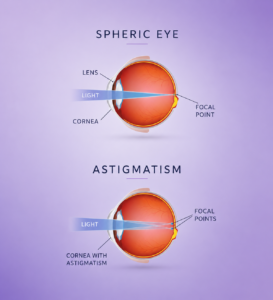
Astigmatismcan affect how clearly you see because the front surface of the eye is irregularly shaped. If you have astigmatism, your cataract lens plan may need to address it.
Some advanced technology lens plans may include astigmatism correction, depending on your eyes and the lens option selected. Your eye doctor may discuss a toric lens with you if it fits your vision needs. For others, a multifocal or trifocal option may be part of a broader plan to reduce dependence on glasses.
Your cataract evaluation will help determine whether astigmatism correction should be part of your treatment plan.
How These Lenses Compare With Other Cataract Lens Options
Choosing a cataract lens is not about picking the most advanced option on paper. It is about choosing the best fit for your eyes.
A monofocal lens focuses at a single distance and is often the standard lens option. A toric lens may help patients with astigmatism achieve clearer vision at a selected range. A multifocal or trifocal lens may support more than one range of vision and may help reduce the need for glasses after surgery. Your eye doctor may discuss a Light Adjustable Lens if you want a customizable vision range after surgery.
Each option has a role. Your doctor and counselor can walk you through the differences so you understand what each lens is designed to do, what it may not do, and what kind of visual outcome you can reasonably expect.
What to Expect at Your Cataract Lens Evaluation
Your cataract lens evaluation is where the decision becomes personal. Your doctor will evaluate your cataracts, measure your eyes, review your overall eye health, and talk with you about how you use your vision every day.
This conversation helps your care team recommend a lens plan that supports your priorities. It also gives you time to ask questions about cost, insurance, recovery, and what vision may feel like after surgery.
Benefits and Things to Consider
For many patients, the biggest benefit of multifocal and trifocal lenses is the ability to see at multiple distances with less reliance on glasses. That can make everyday life feel easier, especially for patients who want more convenience after cataract surgery.
However, every lens option involves tradeoffs. Multifocal and trifocal lenses may not eliminate the need for glasses. Some patients may notice glare, halos, or reduced contrast, especially in certain lighting conditions. These effects may improve with time, but they are important to discuss before surgery.
A thoughtful lens decision should balance freedom, clarity, lifestyle, eye health, and realistic expectations. Southwestern Eye Center’s cataract team can help you compare your options and choose a path with confidence.
Take the Next Step Toward Clearer Vision
Multifocal and trifocal lenses may help you enjoy a broader range of vision after cataract surgery, with less dependence on glasses for many everyday tasks. Schedule a cataract evaluation at Southwestern Eye Center to discuss your lens options with your doctor and determine whether an advanced technology lens is a good fit for your eyes, lifestyle, and vision goals.
FAQ: Multifocal and Trifocal Lenses
Multifocal and trifocal lenses are advanced technology lens implants used during cataract surgery. They are designed to help patients see at more than one distance after the cloudy cataract lens is removed.
Yes. Some multifocal lenses include trifocal technology to support distance, intermediate, and near vision. This may help patients see more comfortably during activities such as driving, computer work, reading, and phone use.
A multifocal lens supports more than one range of vision. A trifocal lens is a type of multifocal lens technology designed to support three ranges of vision: distance, intermediate, and near.
Southwestern Eye Center offers advanced technology lens options for cataract surgery, including multifocal and trifocal lens options when appropriate. Your doctor can explain whether these lenses fit your eyes and vision goals.
Yes, these lenses may reduce your dependence on glasses after cataract surgery. However, they may not eliminate the need for glasses for every task. Some patients still use readers or glasses for very fine print, low-light situations, or specific activities.
Some patients do well with night driving after adapting to multifocal or trifocal lenses, but others may notice glare or halos around lights. Your doctor will review your eye health, lifestyle, and night-driving needs before recommending a lens option.
A good candidate often has cataracts, wants a broader range of vision after surgery, and has eye health that supports the use of advanced technology lenses. Patients with certain corneal, retinal, or eye surface conditions may need a different lens option.
Start with a cataract evaluation at Southwestern Eye Center. Your doctor and counselor can review your measurements, eye health, lifestyle, and goals to help you compare monofocal, toric, multifocal, trifocal, and Light Adjustable Lens options.
Related Posts
Schedule An Appointment Online
Book your next eye care appointment online at a time that works for you. Our easy online scheduling tool makes it simple to find available appointments and request the care you need.